
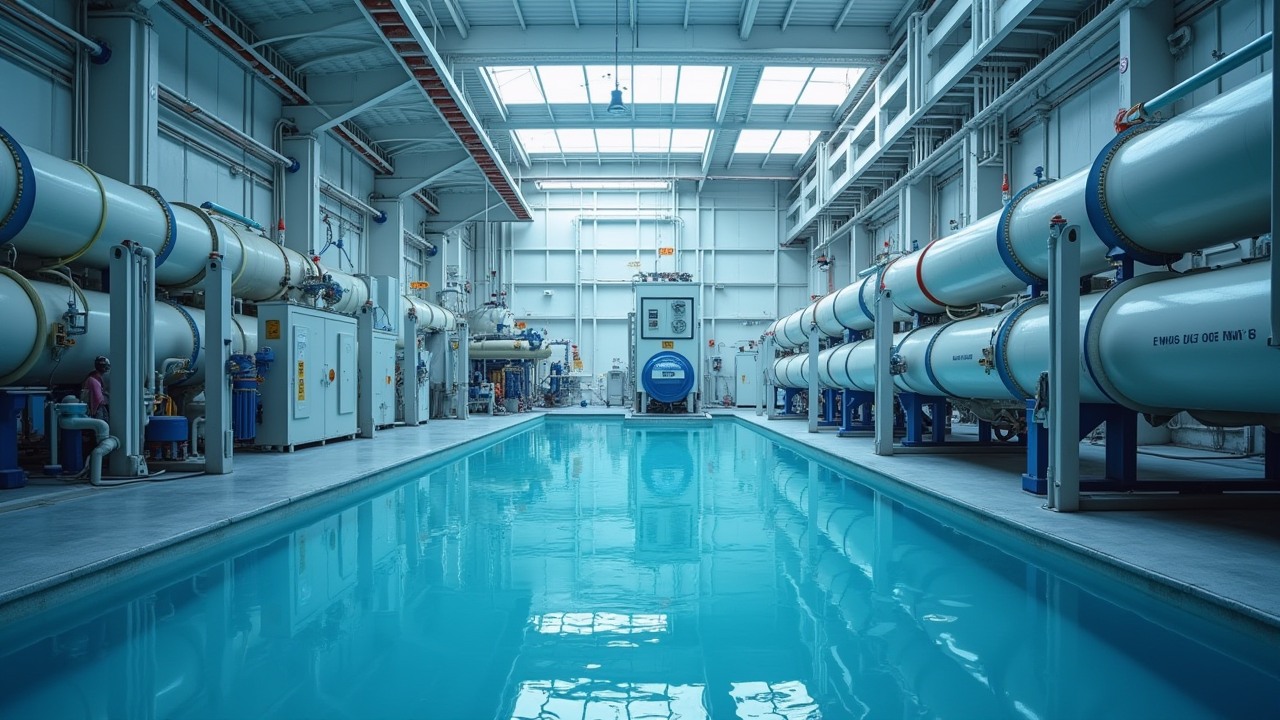
As freshwater sources become increasingly strained worldwide, water desalination has emerged as a crucial technology to meet the growing demand for clean, usable water. By removing salt and other impurities from seawater and brackish water, desalination provides a sustainable alternative for water-scarce regions, coastal cities, and industries that rely heavily on water. This guide dives into the essentials of desalination, covering the different types of technology, benefits and drawbacks, environmental impacts, and what the future holds for this transformative process.
What is Desalination, and Why is It Important?
Desalination is the process of converting seawater or brackish water into freshwater, making it suitable for drinking, irrigation, and industrial purposes. For many coastal and arid regions, desalination is a practical solution to overcome water scarcity, reduce dependency on limited freshwater sources, and boost water security. Major advantages of desalination include:
- Reliable Water Supply: Unlike rivers and reservoirs that depend on rainfall, desalination plants operate continuously, providing a stable supply of water.
- Drought Resilience: In areas prone to drought, desalination offers a dependable alternative to shrinking freshwater reserves.
- Economic Growth: By making water more available for industrial and agricultural use, desalination supports regional economies and population growth.
- Environmental Protection: When managed well, desalination helps reduce the strain on natural water resources, supporting more sustainable ecosystems.
How Does Desalination Work? Key Technologies Explained
Desalination technologies fall into two primary categories: thermal and membrane-based processes. Each type has unique principles and is suited to different scales and types of water sources.
1. Thermal Desalination
Thermal desalination relies on heat to evaporate water, separating it from salts and other impurities. Common methods include:
- Multi-Stage Flash Distillation (MSF): Seawater is heated and then “flashed” into steam in multiple stages. As the steam condenses, it produces freshwater.
- Pros: Reliable and effective for large-scale desalination.
- Cons: High energy consumption and costs.
- Multi-Effect Distillation (MED): Water is evaporated in successive chambers, each at a lower pressure, which reduces the energy required.
- Pros: More energy-efficient than MSF; suitable for large-scale operations.
- Cons: Still energy-intensive and best suited for regions with abundant energy resources.
- Vapor Compression Distillation (VCD): Water is evaporated and then compressed to condense the vapor, producing freshwater.
- Pros: High efficiency and compact; useful for smaller installations.
- Cons: Limited to smaller scales, making it less ideal for city-wide desalination.
2. Membrane Desalination
Membrane-based desalination uses special membranes to separate salts and impurities from water. It is generally more energy-efficient than thermal methods, especially for desalinating seawater.
- Reverse Osmosis (RO): Seawater is pushed through a semipermeable membrane under high pressure, which traps salts and impurities.
- Pros: Energy-efficient, adaptable to various scales, and widely used in cities.
- Cons: Membranes require regular maintenance; pressure pumping is energy-intensive.
- Electrodialysis (ED) and Electrodialysis Reversal (EDR): Uses an electric field to move salt ions through a membrane, separating freshwater.
- Pros: Cost-effective for brackish water desalination.
- Cons: Not as effective for seawater; works best for low-salinity sources.
Benefits of Desalination
- Increased Water Availability: Desalination makes use of the vast ocean supply, providing freshwater even in water-scarce regions.
- Reduced Reliance on Rainfall: Since desalination doesn’t depend on weather, it supplies water year-round.
- Support for Urban and Industrial Growth: Coastal cities can rely on desalination to meet the demands of growing populations and industries.
Drawbacks and Challenges of Desalination
- Energy Demand: Desalination is energy-intensive, particularly for thermal processes, which can drive up costs and contribute to carbon emissions.
- Environmental Impact: Brine, a highly concentrated salt byproduct, is often discharged into the ocean, posing risks to marine life.
- High Costs: Building and operating desalination plants requires a significant financial investment, making it less accessible for some regions.
Environmental Impact of Desalination
The environmental impact of desalination is a concern for coastal ecosystems and for sustainability efforts:
- Brine Disposal: Desalination produces a brine byproduct, a concentrated salt solution that, when released into the ocean, can alter local salinity levels and affect marine ecosystems. Researchers are exploring solutions like brine dilution and finding alternative uses for brine, such as mineral extraction.
- Carbon Footprint: Desalination is traditionally energy-intensive, especially in regions that rely on fossil fuels. Renewable energy sources, such as solar and wind, are increasingly being integrated to power desalination facilities and reduce carbon emissions.
- Impact on Marine Life: Intake structures for seawater can inadvertently capture and harm marine organisms. New designs, such as offshore intake structures, help reduce the impact on aquatic life.
Innovations and Future Trends in Desalination
Desalination technology continues to advance, with a focus on improving efficiency, reducing costs, and mitigating environmental impacts. Some promising trends include:
- Energy Recovery Devices (ERDs): ERDs capture and reuse the energy from high-pressure water flows in reverse osmosis, lowering overall energy consumption.
- Forward Osmosis (FO): FO uses natural osmotic pressure to separate salts from water, a process that consumes less energy than reverse osmosis.
- Hybrid Systems: Combining thermal and membrane technologies, hybrid desalination systems maximize efficiency and adapt to different water quality needs.
- Renewable-Powered Desalination: Solar, wind, and wave energy are being integrated into desalination plants to create more sustainable processes.
- Nanotechnology and Advanced Membranes: Researchers are developing membranes with nanomaterials to increase efficiency, reduce fouling, and extend membrane lifespan.
